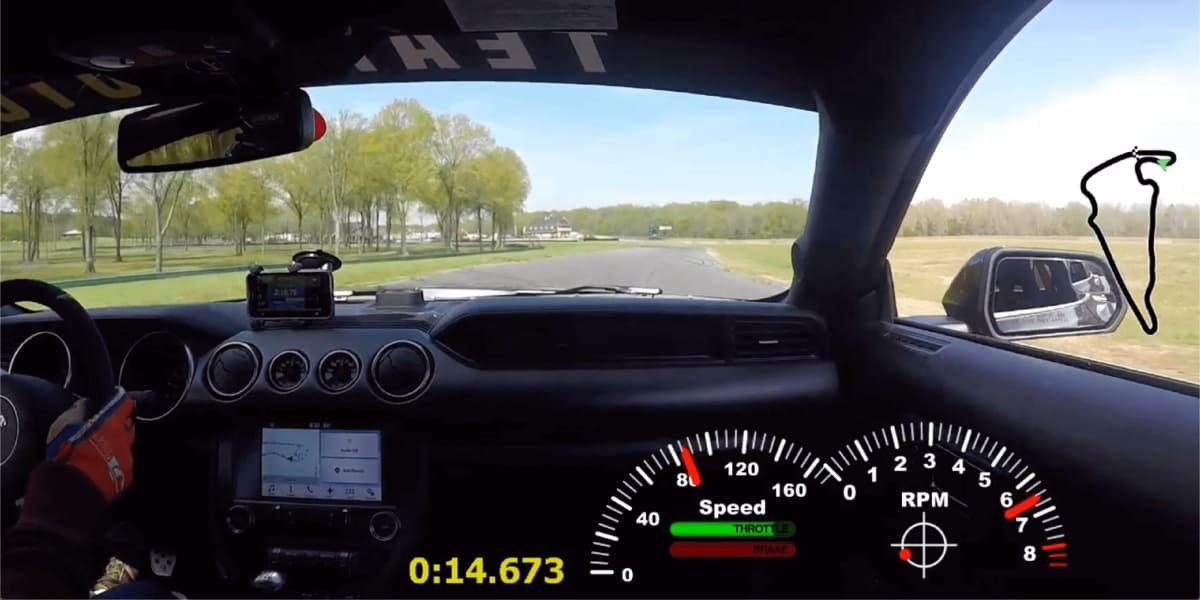
Imagine a dancer perfectly synchronized with their partner, movements fluid, powerful, and precise. That's not far from how a skilled driver navigates a turn, seamlessly blending throttle and brake application to coax maximum performance and control from their vehicle. Throttle & Brake Application Through Turns isn't just about speed; it's about harnessing every ounce of grip, maintaining balance, and setting yourself up for a powerful, stable exit. It's an art, yes, but one built on solid physics and repeatable techniques.
If you’ve ever felt your car push wide (understeer) or get squirrelly (oversteer) mid-corner, or if you simply want to shave seconds off your lap times or drive with more confidence on a winding road, this guide is for you. We’re going to demystify the dance between your right foot and the pedals, transforming theoretical knowledge into practical, actionable insights you can apply on your next drive.
At a Glance: Mastering Cornering Controls
- The Goal: Optimize vehicle balance and tire grip throughout the turn.
- It's a Dance: Seamlessly transition between braking, coasting/maintenance throttle, and acceleration.
- Entry is Key: Brake hard and straight before the turn, then use trail braking to set the car's attitude.
- Apex is Neutral: Aim for minimal steering and balanced weight distribution.
- Exit is Power: Gradually apply throttle as you unwind the steering wheel.
- Weight Transfer Matters: Understand how braking shifts weight forward, and acceleration shifts it back, affecting grip.
- Look Ahead: Your eyes dictate your hands and feet. Spot your braking point, turn-in, apex, and exit well in advance.
- Practice Progressively: Start slow, focus on smoothness, and build speed only once consistency is achieved.
Why Precision Matters: The Dance of Grip and Balance
At its heart, driving through a turn is about managing grip. Your tires are the only connection between your car and the road, and they can only provide a finite amount of grip. This grip has to be shared between braking, accelerating, and turning. Think of it like a "friction circle" – if you're using 100% of your grip for braking, you have 0% left for turning, and vice versa. The magic happens when you distribute that grip intelligently.
When you brake, weight transfers to the front tires, increasing their grip. When you accelerate, weight shifts to the rear, increasing their grip. Turning pushes weight to the outside tires. The goal of expert the physics of weight transfer and brake application is to strategically manipulate this weight transfer to enhance grip where you need it most, precisely when you need it. This keeps the car balanced, stable, and predictable, allowing you to carry more speed safely through the corner.
The Anatomy of a Turn: Three Critical Phases
Every turn, from a gentle bend to a hairpin, can be broken down into three distinct phases: Entry, Apex, and Exit. Your throttle and brake inputs vary significantly across each.
1. Entry: Setting the Stage with Controlled Braking
The entry phase begins the moment you start braking and continues until you reach the apex. This is where you shed speed, position the car, and crucially, begin to prepare it for the turn itself.
- The Braking Zone: Hard and Straight
Before you even think about turning the wheel, you're usually applying the brakes. The best practice, especially when shedding significant speed, is to brake hard and in a straight line. This allows your tires to dedicate 100% of their available grip to braking, maximizing deceleration. As you brake, weight shifts to the front wheels, compressing the front suspension and increasing the contact patch of your front tires. This is a good thing – it primes them for turning. - Initial Brake Release: Gentle Progression
As you approach your turn-in point (the spot where you begin to turn the steering wheel), you don't just abruptly release the brake pedal. Instead, you smoothly and progressively ease off the brakes. This controlled release helps manage the weight transfer back towards the rear of the car, preventing a sudden lurch or destabilization. Imagine slowly letting go of a spring; you don't want it to snap back. - Trail Braking: Sculpting Your Turn-in
Here's where things get interesting and where a significant difference between novice and advanced drivers emerges. Trail braking involves carrying a diminishing amount of brake pressure into the turn as you begin to steer. Why do this? - Keeps Weight Forward: By maintaining a light touch on the brakes, you keep weight transferred to the front tires. This increases their grip, allowing for a sharper, more precise turn-in.
- Helps Rotate the Car: For front-wheel-drive (FWD) cars, it helps prevent understeer (the car wanting to go straight). For rear-wheel-drive (RWD) cars, it can induce a slight, controlled rotation of the rear, pointing the car more effectively towards the apex.
- Adjustability: It offers a micro-level of control. If you realize you've entered too fast or need to tighten your line slightly, a little more brake pressure can help.
The key to successful trail braking is smoothness. The brake pedal release should be a gradual, continuous motion, bleeding off pressure as you increase steering angle. By the time you reach the apex, you should ideally be completely off the brakes.
2. Apex: The Moment of Neutrality (and Micro-Adjustments)
The apex is the geometric or dynamic point where your car is closest to the inside of the turn. This is often the point of minimum speed in the corner, and a critical transition zone.
- Off the Brakes, On the Throttle (Almost):
As you hit the apex, you should be completely off the brakes. At this point, the steering wheel is typically at its maximum angle for that particular turn. Your goal here is neutrality. The car should be balanced, neither accelerating nor aggressively braking. - Maintenance Throttle: Just Enough to Stabilize
Often, at the apex, especially in long, sweeping turns, you'll apply a very light "maintenance throttle." This isn't about accelerating; it's about keeping the driveline engaged and maintaining a slight amount of forward momentum. This subtle throttle application helps stabilize the chassis, settle the rear suspension, and ensure the weight transfer isn't abruptly shifting backward. It prevents the car from feeling "dead" or losing composure as you transition from braking to acceleration. - Minimal Steering Input:
If you've managed your entry and braking correctly, you should require minimal steering input at the apex. The car should feel like it's naturally flowing through the curve, ready to be unwound. This precision allows you to maximize your momentum for the exit. Speaking of maximizing momentum, understanding the optimal line is crucial, especially when Mastering the outside turn.
3. Exit: Unleashing Power with Progressive Throttle
The exit phase begins just past the apex as you start to unwind the steering wheel and ends when the car is completely straightened out and accelerating hard down the next straight. This is where you regain lost speed.
- The Power Application Point: Early and Smooth
As soon as you begin to unwind the steering wheel from the apex, you should also begin to progressively apply throttle. The key word here is "progressively." You're not mashing the pedal; you're smoothly feeding in power as the steering angle decreases. - "Unwinding" and Accelerating: A Coordinated Effort
Think of it as a direct correlation: as you unwind the steering wheel (reducing steering angle), you increase throttle. - When the wheels are turned, the tires have less grip available for acceleration (remember the friction circle). Applying too much throttle too soon will overwhelm the tires, leading to wheelspin in a powerful car, or simply pushing wide (understeer) in any car.
- As the wheels straighten, more grip becomes available for acceleration, allowing you to pour on the power.
- Maximize Straight-Line Speed:
The goal of a good exit is to be at full throttle with the steering wheel perfectly straight as early as possible. This sets you up for maximum straight-line speed down the next section. A common mantra in performance driving is "slow in, fast out." A precise entry and apex allow for an early, strong exit, which is where real speed is gained.
Common Pitfalls and How to Avoid Them
Even seasoned drivers can fall prey to bad habits. Here are some of the common cornering mistakes related to throttle and brake application and how to correct them:
- "Stabbing" the Brakes or Throttle: Abrupt inputs upset the car's balance. Imagine dropping a brick on a scale versus gently placing it. Sudden weight shifts can cause loss of grip, understeer, or oversteer. The fix: Think smooth, progressive transitions for all pedal inputs.
- Braking Too Late (or Too Early):
- Too Late: You'll carry too much speed into the turn, force drastic mid-corner corrections, or run wide. The fix: Establish clear braking reference points and practice hitting them consistently. It's better to be slightly early and carry less speed than too late and overshoot.
- Too Early: You'll scrub off too much speed, losing momentum, and leaving performance on the table. The fix: Gradually experiment with braking a little later, but always prioritize smoothness and control.
- Turning While Still Braking Hard: Unless intentionally trail braking with a specific purpose, turning while still braking heavily can overwhelm the front tires, leading to severe understeer. The fix: Ensure your heaviest braking is done in a straight line before initiating your turn-in.
- "Lift-off Oversteer" (for RWD/FWD): Suddenly lifting off the throttle mid-corner can transfer weight abruptly to the front, lightening the rear and causing it to step out. The fix: If you need to reduce speed mid-corner, do so gently, or use a light touch of the brake pedal (trail braking principles).
- Too Much Throttle Too Early: Applying full throttle when the steering wheel is still significantly turned will overload the tires, resulting in wheelspin (RWD) or understeer (FWD/AWD). The fix: Be patient. Match your throttle application to your steering wheel unwind. Think of it as opening a faucet – gradually.
Advanced Techniques and Nuances
Once you've mastered the fundamentals, you can begin to explore more advanced techniques that further refine your control.
Trail Braking Deep Dive: More Than Just Slowing Down
Beyond simply carrying speed into a turn, expert trail braking is a subtle art. It allows you to fine-tune the car's balance and rotation precisely. By varying the rate at which you release the brake pedal, you can:
- Tighten Your Line: Maintain more brake pressure for longer to keep the nose tucked in and tighten your turning radius.
- Loosen Your Line: Release brake pressure a bit earlier if you've turned in too sharply or need to open up your line.
It’s a continuous conversation with the car, and it's essential for understanding your vehicle's grip limits.
Throttle Steering: Using Power to Guide
This technique is predominantly for rear-wheel-drive cars, but FWD cars can also use a form of it (though typically for correction rather than intentional steering). Throttle steering involves using the throttle pedal to induce or manage yaw (rotation) of the vehicle.
- Inducing Oversteer: In a powerful RWD car, a sudden, aggressive throttle application mid-corner can break the rear tires' traction, causing the tail to slide out. A skilled driver can then manage this slide with counter-steering and modulate the throttle to maintain the slide or use it to point the car.
- Managing Balance: Even without inducing a slide, subtle throttle adjustments can shift weight to the rear, influencing the car's understeer/oversteer characteristics. This is a very advanced technique and requires significant practice, ideally in a controlled environment. Think of it as using power to help pivot the car, rather than just the steering wheel. Exploring basic principles of throttle steering can be a game-changer for car control.
Left-Foot Braking: Speed and Control
Primarily used in racing, rally, and by some aggressive street drivers, left-foot braking involves using your left foot for the brake pedal and your right foot for the accelerator.
- Benefits:
- Faster Response: Eliminates the precious milliseconds it takes to move your right foot between pedals.
- Maintains Boost (Turbo Cars): Allows you to keep some throttle applied while braking, keeping the turbo spooled up and minimizing lag on corner exit.
- Fine-Tune Weight Transfer: Enables simultaneous brake and throttle application (in varying degrees), offering incredible control over weight transfer and car attitude, especially in FWD cars to combat understeer.
- Challenges: Requires significant practice to develop independent control of both feet and to avoid accidentally pressing both pedals simultaneously (unless that's the desired effect). It feels unnatural at first.
Heel-Toe Shifting (Brief Mention)
While not directly about throttle and brake application through the turn, heel-toe downshifting is crucial before the turn. It allows you to brake hard, downshift smoothly, and blip the throttle simultaneously to match engine RPMs to the lower gear, preventing sudden engine braking (which can destabilize the rear of the car). This prepares the car for a powerful exit without unsettling it.
Vehicle Response: Reading the Road and Your Car
Understanding how your vehicle responds to your inputs is as important as the inputs themselves.
- Understeer vs. Oversteer:
- Understeer (push): The front tires lose grip, and the car wants to go wider than your steering input. Often caused by too much speed on entry, too much throttle on exit (FWD), or braking too hard while turning. To correct (gently): ease off the throttle, slightly reduce steering angle to regain front grip, then reapply steering.
- Oversteer (slide): The rear tires lose grip, and the car's tail steps out. Often caused by abrupt throttle lift-off mid-corner, too much throttle (RWD), or aggressive braking while turning. To correct (gently): counter-steer (steer into the slide) and modulate the throttle to regain control.
Knowing how factors influencing tire performance can drastically impact these scenarios. - Tire Feedback: The Language of Grip:
Your tires "talk" to you through the steering wheel, seat, and even sound. Learn to listen. As tires approach their limit, they start to make noise (squealing), and the steering feel might lighten or become vague. This is your cue to reduce aggression slightly before losing grip entirely. - Surface Conditions: Adjusting Your Dial:
Wet roads, loose gravel, or even cold asphalt drastically reduce available grip. You must adjust your braking points, steering inputs, and throttle application accordingly. Be smoother, slower, and anticipate less grip. This also highlights the importance of how tire choice affects handling in varying conditions.
Beyond the Track: Everyday Driving Benefits
While we've discussed performance driving, the principles of smooth, precise throttle and brake application through turns aren't just for race cars. They translate directly to safer, more efficient, and more enjoyable everyday driving.
- Increased Safety: A balanced car is a predictable car. Learning to manage weight transfer and grip means you're better equipped to react to unexpected situations, like avoiding an obstacle or navigating a sudden curve on a rainy day. Your car won't be as easily unsettled.
- Better Fuel Economy: Smooth inputs are efficient inputs. Aggressive braking and acceleration waste energy. By flowing through turns, you maintain momentum and reduce the need for drastic speed changes, leading to better mileage.
- Extended Component Life: Less stress on your brakes, tires, and suspension components means they'll last longer. Hard braking and aggressive cornering accelerate wear and tear.
Practice Makes Perfect: How to Hone Your Skills
Like any skill, mastery of throttle and brake application through turns requires deliberate practice.
- Start Slow, Focus on Smoothness: Don't chase speed. Begin by driving corners well below the limit. Concentrate solely on making your brake release, steering input, and throttle application as smooth and progressive as possible. Aim for seamless transitions.
- Look Ahead: Your eyes are your most important tool. Look far down the road, through the turn, to your exit point. Your hands and feet will naturally follow where your eyes are directed. This is crucial for anticipating inputs.
- Visualize the Line: Before you enter a turn, visualize your ideal path: where you'll brake, where you'll turn in, your apex, and your exit.
- Find a Safe Environment: Empty parking lots (for low-speed drills), autocross events, or track days are ideal for exploring limits in a controlled environment. Consider enrolling in an advanced driving school for expert guidance.
- Seek Coaching: A good driving instructor can provide invaluable feedback, identifying subtle nuances in your technique that you might not notice yourself.
- Consistency Over Speed: The truly fast drivers are consistently smooth. Speed is a byproduct of precision, not the goal itself.
Your Next Lap: Putting It All Together
Mastering Throttle & Brake Application Through Turns is a continuous journey. It’s about more than just knowing what to do; it’s about developing the feel, the muscle memory, and the instinct to execute it flawlessly, every time. Start with the basics: smooth braking, progressive release, gentle throttle application at the apex, and controlled power out. As your confidence and understanding grow, you can then delve into more advanced techniques.
Remember, every corner presents an opportunity to refine your craft. Whether you're on a spirited drive or just commuting, paying attention to these fundamentals will not only make you a faster driver, but a safer, more confident, and ultimately, a more connected one. So, take these insights, get behind the wheel, and start dancing with your car through the turns.