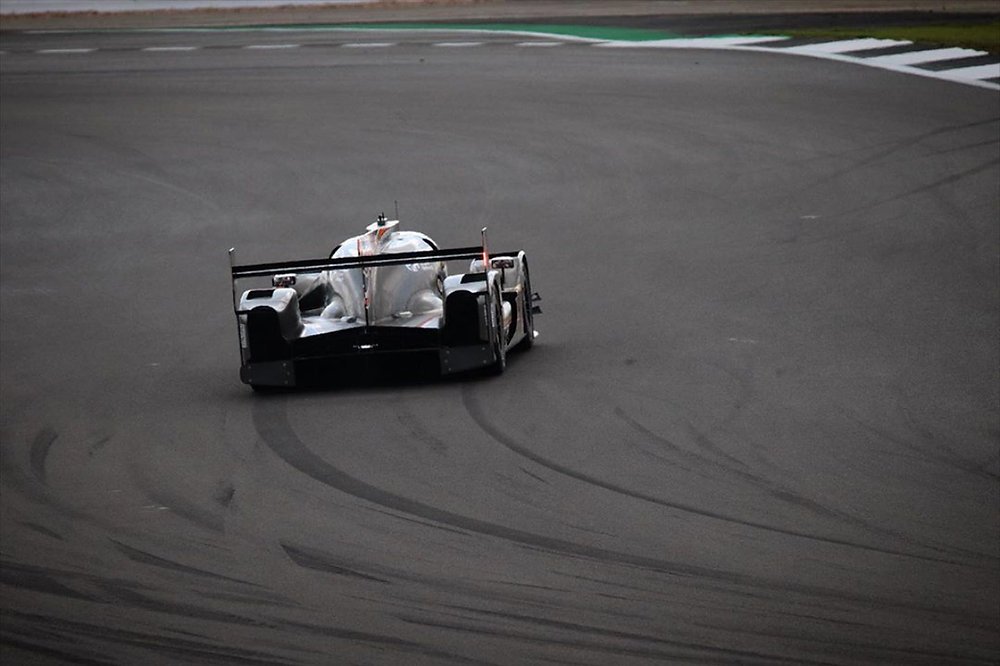
Ever wonder why a race car hugs the track, seemingly defying physics through a tight bend, while a top-heavy SUV feels a little, well, tippy? The secret lies in a fundamental principle of vehicle dynamics: weight transfer in cornering. It’s the invisible ballet of forces constantly at play, redistributing your vehicle's mass across its tires as you navigate turns, accelerate, or brake. Understanding this phenomenon isn't just for professional drivers; it’s crucial for anyone who wants to drive safer, smoother, and with more confidence.
It doesn't change your car's total weight, but it certainly changes how that weight feels to the tires, impacting grip, handling, and stability in profound ways. Let's peel back the layers and discover why mastering weight transfer is your key to better control.
At a Glance: Understanding Weight Transfer
- What it is: The redistribution of a vehicle's mass across its tires during driving maneuvers, especially cornering.
- Why it matters: Directly affects tire grip, vehicle stability, and overall handling performance.
- Key factors: Your vehicle's Center of Gravity (CG) height, wheelbase, track width, and how aggressively you accelerate, brake, or turn.
- The goal: Manage weight transfer to maintain optimal tire traction and prevent loss of control.
- Impact on driving: Smoother driving, faster lap times, and enhanced safety.
The Dynamics of Motion: What is Weight Transfer?
Think of your vehicle as a carefully balanced object. When it’s sitting still, its weight is distributed relatively evenly across all four tires. The moment you introduce motion – hitting the gas, slamming the brakes, or turning the steering wheel – that balance shifts. This shift is weight transfer. It's a fundamental concept that separates confident drivers from those who struggle with vehicle control.
While we're focusing on cornering, it's helpful to remember there are a few types of weight transfer at play:
- Longitudinal Weight Transfer: This happens along the length of your vehicle. When you accelerate, weight shifts to the rear wheels, momentarily increasing their grip. Hit the brakes, and weight lunges forward, loading the front tires.
- Lateral Weight Transfer: This is our star player for cornering. As you turn, the vehicle's momentum tries to keep moving in a straight line. This inertia creates a force that pushes the vehicle's mass outwards, shifting weight to the tires on the outside of the turn. The outer tires become heavily loaded, while the inner tires become lightened.
- Combined Weight Transfer: Drive through a corner while braking or accelerating, and you're experiencing both longitudinal and lateral shifts simultaneously. This is where things get truly complex, and where skilled drivers shine.
Why Every Driver Should Care About Weight Transfer
Understanding weight transfer isn't just academic; it's practical. It's the difference between a smooth, controlled turn and a scary moment of oversteer or understeer.
- Optimizing Traction: Tires only have so much grip. When you corner, weight transfers to the outside tires, increasing their load and therefore their potential grip. Conversely, the inside tires become unloaded, reducing their available grip. Managing this balance is key to using all your tires effectively.
- Maintaining Stability: Excessive or sudden weight transfer can destabilize your vehicle. Imagine an abrupt lane change at highway speeds; the rapid lateral weight transfer can cause the vehicle to sway or even lose control.
- Preventing Understeer and Oversteer:
- Understeer: When the front tires lose grip and the car pushes wide in a turn (often called "pushing"). This usually happens when the front tires are overloaded, often from too much weight transfer to the front or not enough lateral grip.
- Oversteer: When the rear tires lose grip and the car's tail swings out (often called "fishtailing"). This occurs when the rear tires become overloaded or too lightly loaded, leading to a loss of traction.
- Enhanced Safety: In everyday driving, understanding weight transfer helps you anticipate how your vehicle will react in various situations, allowing for smoother inputs and safer maneuvers.
- Improved Performance: For enthusiasts and racers, optimizing weight transfer is critical for faster lap times, better handling, and a more connected driving experience. It’s about leveraging every ounce of grip your tires can offer.
The Science Behind the Shift: Core Variables at Play
The magnitude of weight transfer isn't random; it's governed by a few key physical characteristics of your vehicle and how you're driving it. You don't need to be a physicist to grasp these concepts, but knowing them helps you understand why different vehicles behave so differently.
- Acceleration (a): Whether it's positive (speeding up) or negative (braking/deceleration), the harder you accelerate or brake, the more dramatic the weight transfer. For cornering, we're talking about lateral acceleration (a_y), the g-force pulling you sideways. Higher lateral acceleration means more weight shifts to the outside of the turn.
- Center of Gravity (CG) Height (h): This is perhaps the most critical factor. The CG is the point where all the vehicle's mass is considered to be concentrated. A higher CG (like in an SUV or truck) creates a longer lever arm for forces to act on, leading to much more dramatic weight shifts and noticeable body roll. A lower CG (like in a sports car) keeps the weight closer to the ground, reducing the leverage and thus minimizing transfer.
- Vehicle Mass (m): Simply put, a heavier vehicle has more mass to transfer. While the percentage of weight transfer might be similar to a lighter vehicle, the absolute force transferred is greater.
- Wheelbase (w): This is the distance between your front and rear axles. A longer wheelbase generally reduces longitudinal weight transfer (front-to-back), making acceleration and braking feel more stable.
- Track Width (t): This is the distance between the center of your left and right wheels. A wider track width (think of a go-kart's stance) reduces lateral weight transfer. Why? The wider base provides more resistance to tipping, effectively reducing the leverage of the lateral forces.
Imagine a tall, narrow box versus a short, wide box. Which one is easier to tip over? The tall, narrow one. That’s the difference CG height and track width make in weight transfer.
Calculating the Shift: A Practical Perspective
While you don't need a calculator mid-corner, understanding the concept of quantifying weight transfer can demystify it. The general idea is this: Weight transferred is proportional to the vehicle's mass, the acceleration it experiences (lateral for cornering), and its Center of Gravity height. It's inversely proportional to the wheelbase (for longitudinal) or track width (for lateral).
For lateral weight transfer, the formula is roughly ΔW = (m * a_y * h) / t. This means the change in weight (ΔW) on one side is directly proportional to mass (m), lateral acceleration (a_y), and CG height (h), and inversely proportional to track width (t).
How a "Weight Transfer Calculator" Works (Conceptually):
These tools, often found online or in specialized software, help engineers and enthusiasts visualize the forces at play. You'd typically input:
- Vehicle Mass: Your car's weight (e.g., 1,800 kg or 4,000 lbs).
- CG Height: How high its Center of Gravity is (e.g., 0.6 meters or 2 feet). This is often the trickiest input to find precisely.
- Wheelbase/Track Width: The distance between your axles and your left-right wheels (e.g., 2.5 meters wheelbase, 1.6 meters track width).
- Acceleration/Cornering Force: How hard you're pushing it (e.g., 0.9 g lateral acceleration, or 8.8 m/s²).
The calculator then crunches these numbers to tell you how much weight (in Newtons or pounds) is effectively shifting.
Example Calculations in Action:
Let's look at how these variables play out:
- A Sports Car Accelerating: Imagine a sports car (Mass 1,200 kg, CG Height 0.5 m, Wheelbase 2.5 m) accelerating hard at 3 m/s². The calculation reveals approximately 720 Newtons of weight shifts to the rear wheels. This added rear grip helps launch the car efficiently.
- A Pickup Truck Braking: Now consider a heavier pickup truck (Mass 2,500 kg, CG Height 0.85 m, Wheelbase 3.2 m) braking hard with a deceleration of -5 m/s². More than 3,320 Newtons of weight could shift dramatically to the front. This immense forward transfer helps explain why heavy trucks can nose-dive under hard braking and require more stopping distance.
- A Vehicle Cornering: Take a mid-sized sedan (Mass 1,800 kg, CG Height 0.6 m, Track Width 1.6 m) taking a corner at 0.9 g lateral acceleration (about 8.8 m/s²). This maneuver could shift over 5,900 Newtons of weight to the outer tires. That's a massive load for those tires to handle, highlighting why the condition of your tires is paramount.
Getting the Numbers Right: Measuring Your Inputs
For those keen on precise understanding or vehicle tuning, accurate input data is key.
- CG Height: This is often the hardest to get. Manufacturers sometimes provide it, or you can find estimations for similar vehicle types. Advanced methods involve specialized scales and balancing.
- Wheelbase/Track Width: These are typically in your owner’s manual, on the manufacturer's website, or easily measured directly.
- Acceleration: GPS-based smartphone apps, dedicated data loggers, or even performance figures (like 0-60 times for acceleration) can help estimate these values.
Beyond the Basics: Factors Affecting Weight Transfer
While the core physics provides the framework, several other elements significantly influence how weight transfer plays out in the real world:
- Suspension Setup: This is a huge one.
- Spring Rates: Stiffer springs resist body roll and dive/squat more effectively, reducing the amount of movement during weight transfer.
- Dampers (Shocks): These control the rate at which weight transfer occurs. Well-tuned dampers allow for smooth, controlled shifts, preventing sudden, jarring movements that can upset the chassis.
- Sway Bars (Anti-roll Bars): These bars connect the left and right sides of your suspension. They directly resist body roll in cornering, effectively "sharing" the load between the inner and outer wheels and limiting how much weight completely unloads the inner tire.
- Tire Grip: The tires are your only contact with the road. Better tires (softer compounds, optimized tread patterns) can handle higher loads and provide more grip, allowing for greater acceleration, braking, and cornering forces before traction is lost. If your tires can't handle the load from weight transfer, you'll slide.
- Load Position: Where you place passengers and cargo directly impacts the vehicle's CG. Hauling heavy items on a roof rack significantly raises the CG, making weight transfer more pronounced. Keeping heavy items low and centered is always best.
- Road Grade: Driving uphill or downhill changes the effective weight distribution. Uphill acceleration will feel more pronounced at the rear, while downhill braking will increase frontward transfer.
- Braking Bias: The proportion of braking force applied to the front versus rear wheels. A strong front bias (common in many cars) means more frontward weight transfer under braking. Adjusting this can fine-tune how the vehicle reacts to braking inputs in a corner.
Mastering the Movement: Controlling Weight Transfer
You can't eliminate weight transfer, but you can certainly control it. Both vehicle design and your driving inputs play a massive role.
Vehicle Modifications and Tuning:
- Lower the Vehicle's Center of Gravity (CG): This is arguably the most effective modification. Lowering the suspension physically reduces the CG height, minimizing the leverage forces have to create body roll and weight shift. This is why sports cars are so low to the ground.
- Widen the Track Width: Spacers or wider wheels can increase your vehicle's track width. This provides a wider base, reducing the degree of lateral weight transfer for a given cornering force.
- Stiffen the Suspension: Upgrading to stiffer springs and performance dampers will resist excessive body roll, dive, and squat. This keeps the vehicle flatter and more stable, allowing for more predictable weight transfer. Stiffer sway bars also play a crucial role in managing lateral shifts.
- Upgrade Tires: Investing in performance tires with better grip allows your vehicle to handle higher loads created by weight transfer, enhancing traction and control.
- Strategic Weight Distribution: For vehicles often carrying cargo, plan its placement. Keep heavy items low in the chassis and as close to the vehicle's centerline as possible to maintain a favorable CG.
Driving Techniques for Smooth Control:
This is where the magic happens. A skilled driver uses inputs to manage weight transfer, rather than react to it.
- Smooth Inputs: Abrupt steering, braking, or acceleration are the enemy of smooth weight transfer. Gradual, progressive inputs allow the chassis and tires to adapt to the changing loads, maintaining grip.
- Trail Braking: This advanced technique involves carrying some braking force into the initial part of a corner. It maintains load on the front tires, enhancing front-end grip and helping the car "turn in" more effectively. However, it requires a delicate touch to avoid overloading the front tires.
- Progressive Acceleration Out of Corners: As you exit a corner, gradually apply throttle. This smoothly shifts weight to the rear, increasing rear tire grip and propelling you forward efficiently without breaking traction. Too much throttle too soon will unload the front and can induce understeer or oversteer if the rear tires lose grip.
- Looking Ahead: Good vision allows you to anticipate corners and prepare your inputs, rather than reacting suddenly. This facilitates smoother weight transfer.
- Understanding the Apex: Hitting the apex correctly allows you to straighten the wheel earlier, reducing the time your tires spend under maximum lateral load. This enables you to apply power sooner and more effectively. When you're cornering, remember that the forces are pushing your vehicle's mass to the outside of the turn. This outside edge works harder, and understanding this helps you refine your approach. Learn more about outside turns for a deeper dive into optimizing your lines.
Common Myths & Clarifications About Weight Transfer
- Myth: You can eliminate weight transfer.
- Clarification: Not possible. As long as there's mass and acceleration, there will be weight transfer. The goal is to control and manage it.
- Myth: Stiff suspension always means better handling.
- Clarification: While stiffer suspension reduces body roll, too stiff can lead to a harsh ride, reduced tire contact patch on bumpy surfaces, and make the car skittish, actually reducing overall grip and predictability. There's a delicate balance.
- Myth: Only race cars deal with weight transfer.
- Clarification: Every vehicle on the road experiences weight transfer. It's just more pronounced and critical in high-performance driving, but its principles apply equally to your daily commute. Understanding it makes you a safer driver, even if you never see a racetrack.
- Myth: Weight transfer only affects the tires.
- Clarification: It impacts the entire chassis, the suspension components, and even how comfortable passengers feel. Excessive transfer translates to discomfort and instability.
Driving with Intent: The Art of Smooth Transitions
Ultimately, "Weight Transfer in Cornering" isn't just about formulas and physics; it's about the art of driving. It’s about feeling the car, understanding its limits, and using your inputs to maintain that delicate balance of grip.
A driver who understands and consciously manages weight transfer is often described as "smooth." They brake progressively to load the front tires just enough for turn-in, gently release the brake to allow the weight to settle laterally as they corner, and then progressively apply throttle as they unwind the steering, shifting weight to the rear for maximum exit grip. Each input is deliberate, a conversation with the road, anticipating how the vehicle's mass will respond.
Vehicles with higher Centers of Gravity, like SUVs and pickup trucks, will always experience more dramatic weight shifts compared to low-slung sports cars. This is an inherent design characteristic. Understanding this helps you adjust your driving style to suit your vehicle, recognizing its natural tendencies and driving within its safety margins.
Your Grip, Your Control: The Final Word
Weight transfer in cornering is a non-negotiable aspect of vehicle dynamics. It’s a constant force shaping how your car responds to your commands. By understanding its principles, appreciating the variables that influence it, and adopting driving techniques that work with it rather than against it, you unlock a new level of confidence and control behind the wheel.
It's about making your vehicle an extension of yourself, feeling the subtle shifts, and responding with precision. Whether you're navigating a tight parking lot, merging onto a busy highway, or carving through a canyon road, mastering weight transfer is your ultimate tool for boosting vehicle grip, enhancing stability, and truly enjoying the drive.